Softening the Clay: rTMS and Neuroplasticity
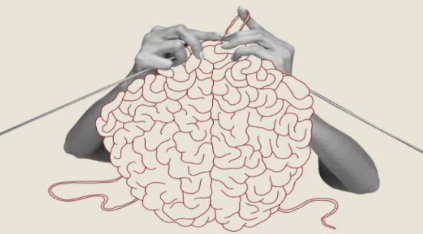
Picture trying to mold a beautiful pottery piece out of a block of rigid clay. You can press, mold, and reshape it as much as you like, but the stubborn clay refuses to give way. The same goes for millions of depressed and anxious patients who struggle to change their thought patterns using regular talk therapy. The neural pathways may have grown rigid and locked in the repetitive cycles of negativity . This is where rTMS comes to play its part. Think of “rTMS as a stream of water which allows the firm clay to soften,making it easier to shape.”Using magnetic stimulation, rTMS harnesses the power of neuroplasticity to turn a brain which is resistant to change into a malleable foundation for growth and healing.It does not reprogram your thinking but allows the therapist to make changes by first bringing inactive brain areas back into action and turning it into a state where any shaping can be done.
WHAT IS NEUROPLASTICITY?
“The process through which the brain changes by adapting and forming new nerve connections is referred to as neuroplasticity.” It can be termed as “rewiring” of the brain, allowing humans to gain knowledge, retain memories, adapt after suffering injury, and respond positively to their surroundings.
Learning, memory formation, emotion regulation, and behavior modification depend on neuroplasticity. For example, therapy approaches such as cognitive behavioral therapy utilize neuroplasticity to improve people’s thinking and behavioral patterns.
However, sometimes the brain can lock itself into self-destructive cycles that stop it from adapting to environmental changes, such as when a person suffers from disorders such as anxiety and depression. This implies that increased neuroplasticity will help the brain become more adaptable.
WHAT IS rTMS?
“rTMS (Repetitive Transcranial Magnetic Stimulation) is a non-invasive, outpatient brain stimulation therapy.” It uses electromagnetic pulses to stimulate nerve cells in specific regions of the brain, typically to treat mental health conditions like major depression and OCD.
How Does rTMS Work?
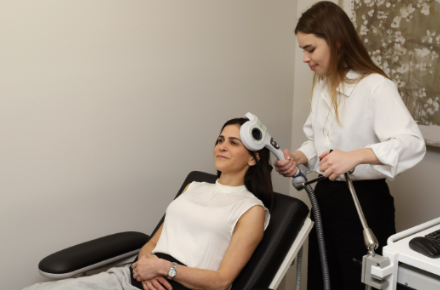
In an rTMS procedure, an “electromagnetic coil is applied to the surface of the scalp at the brain site which is involved in controlling mood disorders.” rTMS uses low-level magnetic pulses to stimulate specific areas of the brain. This stimulation activates nerve cells and encourages the release of neurotransmitters such as serotonin and dopamine, which play an important role in mood regulation. As more treatments are done, the affected areas of the brain will be activated and better communicate within the brain tissues, hence reducing the symptoms.
A single session of rTMS takes “20 to 40 minutes depending on each person, but the treatment sessions take place five days in a week and continue up to four or six weeks.” Patients stay fully alert and conscious during rTMS without requiring any anesthesia. People have reported only a tingling feeling in the scalp and a clicking sound during rTMS treatments. It is also a very safe procedure since it produces only mild side effects such as headache and some scalp sensitivity that will gradually disappear as treatment continues.
Benefits of combining rTMS & Talk therapy
If neuroplasticity refers to the brain’s capacity to alter itself, psychotherapy comes into play as the means through which neuroplasticity is directed to follow a certain course in order to bring about effective change in an individual. The combination of rTMS and psychotherapy can best be described using the metaphor of ‘softening the clay’ where rTMS functions as the water used to soften the hard clay, making it flexible enough, and psychotherapy functions as the hands which molds the softened clay into the desired shapes.
Several benefits can be obtained from the integration of the two types of treatment. For instance, increased neuroplasticity achieved via rTMS makes it possible to challenge established beliefs, adopt a different way of thinking, and use new coping strategies. Furthermore, rTMS may help mitigate conditions such as low mood, anxiety, and inability to concentrate so that patients can easily immerse themselves in therapy to benefit fully from it.
Such an integration could prove especially advantageous for patients suffering from, anxiety disorders, obsessive-compulsive disorder (OCD), post-traumatic stress disorder (PTSD), or those that have had no success from pharmacological interventions, psychotherapy, or both. The combination of biological and psychological approaches in mental illness ensures that rTMS therapy, when paired with talking therapy, is used for lasting healing. If rTMS helps to mold the clay, psychotherapy helps shape it into new forms that will endure even after the treatments have stopped.
Conclusion:
The combination of rTMS with talk therapy is revolutionary when it comes to the treatment of depression, anxiety, and other mental illnesses since it combines the biological and psychological aspects of therapy. In other words, rTMS can be considered as water, which “softens the clay,” while psychotherapy serves as hands that “mold it.” Neuroplasticity induced by rTMS gives an opportunity to break the vicious cycle of self-destruction and become flexible enough to respond adequately to external stimuli. Once the rTMS stimulates brain regions and makes them start producing necessary neurotransmitters, such as serotonin or dopamine, psychotherapy plays the role of hands that shape neuroplasticity in a correct way and provide patients with tools that enable them to cope with their problems successfully. Such a treatment option works best for people suffering from anxiety, obsessive-compulsive disorder, post-traumatic stress disorder, or other similar illnesses since it is particularly difficult to overcome them using only conventional medication or talk therapy.
References:
Fitzsimmons SMD, Oostra, E., Postma, T. S., van der Werf, Y. D., & van den Heuvel, O. D. (2024). Repetitive transcranial magnetic stimulation-induced neuroplasticity and the treatment of psychiatric disorders: State of the evidence and future opportunities. Biological Psychiatry, 99(6), 453-465. https://doi.org/10.1016/j.biopsych.2023.11.016
Kricheldorff, J., Beyer, L. M., & Kraft, J. (2022). Evidence of neuroplastic changes after transcranial magnetic, electric, and deep brain stimulation. Brain Sciences, 12(7), 869. https://doi.org/10.3390/brainsci12070869